Finmo Review (2026)$0 Business Account, 0.07% Intro FX
 By Daan Haket · Researched and written with an AI assistant · who does what
The low FX rate is an introductory offer with strings: 12 months only, a USD 10,000 monthly conversion minimum from the fourth full month, and Singapore office hours.
startups, scale-ups and mid-market companies that collect and pay in several currencies and convert at least USD 10,000 a month on major pairs, and want one account with no monthly fee.
you need FX rates you can check on a public page before signing up, deep accounting sync, or your company is in a sanctioned or high-risk country; or your monthly conversions are small, because the 0.07% introductory margin depends on a USD 10,000 monthly minimum.
Transparency: the “Visit” links on this page are affiliate links: we may earn a commission if you sign up, at no extra cost to you. No vendor can pay for a better review or verdict. How we make money →
Pricing (2026)
✓ Pricing re-verified 6 Nov 2026
“Account opening $0 Monthly fee $0 Minimum balance None User seats Unlimited, free”Source: finmo.net/pricing, read 6 Nov 2026
Finmo sells three things. The Business Account is free to hold: $0 to open, $0 a month, no minimum balance and unlimited user seats at no charge. You pay per transaction instead. SWIFT payouts carry a US$5 Finmo fee per transfer on supported corridors, and conversions on supported major currency pairs include a 0.07% FX margin (7 basis points) in the rate.
That 0.07% is an introductory price, and the conditions matter. It runs for 12 months from the day you complete KYB. From the fourth full calendar month after you register, you must convert at least USD 10,000 equivalent each month to keep it. It only applies to conversions made Monday to Friday, 08:00 to 17:00 Singapore time, and not to Treasury, Embedded or any API access.
Full pricing notes (2 more paragraphs)
Finmo does not publish the margins that apply after the promotion or outside those hours; it told us on 6 November 2026 that standard margins are set by currency pair and volume, are shared at onboarding and typically fall between 7 and 20 basis points (0.07% to 0.20%). That range comes from Finmo, not from a public page, and we have not verified it.
Local transfer allowances depend on the payment method and your account, and payments sent through the API are priced separately. Finmo Treasury (Finmo's line: "Every bank account, one view of your cash") and Finmo Embedded ("Licensed global payments infrastructure to build on") have no public price: Finmo says pricing combines subscription and usage fees based on your banks, volumes and integration scope.
Plans change, so check the live price on their site before you buy.
Category context: Financial Operations. Across the 11 tools in this category that we researched with a public US-dollar price, the median entry price is about $25 a month (lowest paid plan as listed, per seat where the vendor prices per seat). Compare pricing conditions in the Software Cost Atlas →
The honest knock
What you pay after that, or outside those hours, is not on a public page: Finmo says it is set per currency pair and volume at onboarding, typically 7 to 20 basis points. Treasury and Embedded are quote-only. Accounting links are limited: the Xero integration must be switched on by your account manager, and the QuickBooks integration is in beta and syncs only receivables and payables, not transactions. Finmo does not publish a country list; the licence and registration statements are Finmo's own, and we did not check them with the regulators.
What Finmo does
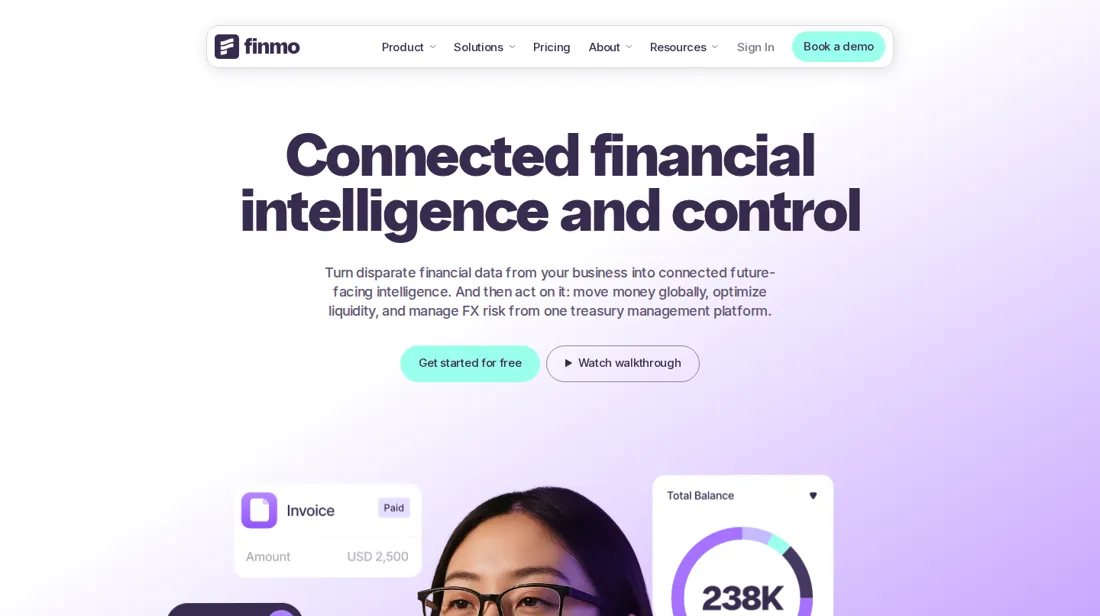
Business account and treasury platform: collect in 45+ currencies, hold 27+ and pay out to 195+ countries, with treasury management and embedded payments for larger finance teams.
Will you keep the 0.07% rate?
The headline margin is conditional. From the fourth full month you need at least USD 10,000 equivalent in conversions every month, made during Singapore market hours, or you fall back to standard pricing. Finmo told us those standard margins depend on the currency pair and your volume, are shared at onboarding and typically sit between 7 and 20 basis points; they are not on a public page. A business that converts that much on major pairs during office hours gets the lowest rate for the first year; one that converts less, or mostly at night or on weekends, should ask for its own standard margins in writing during onboarding, before moving money.
How to actually use Finmo
Sign up with a business email and verify your email and phone number. Then enter your legal business name, registered address, business type and tax identification number, add details of your representatives, shareholders and directors, and sign Finmo's Merchant Service Agreement. Finmo's compliance team reviews the application; you can explore the sandbox in the meantime. Before you can make real transactions you must switch on two-factor authentication and add and verify a settlement bank account.
Who can apply: Finmo's site says Singapore-incorporated companies can apply in a few minutes and that eligible foreign businesses can open a Singapore non-resident account. Finmo told us on 6 November 2026 that businesses incorporated in any market can onboard, except those in sanctioned, high-risk or prohibited countries; it does not publish a single country list. Finmo's licence page lists licences or registrations in Singapore, the United Kingdom, Australia, New Zealand, the United States, Canada, Dubai (DIFC) and Hong Kong.
Documents and checks depend on your business and jurisdiction. We did not open a business account or move money ourselves.
Where this section comes from: our research notes (94 words)
Finmo's own website and documentation (finmo.net/pricing, the Business Account launch promotion terms, the Business Account and licence pages, and the setup, activation, Xero, QuickBooks and refunds pages on docs.finmo.net), read on 6 November 2026, plus Finmo's answers to our questions of the same day on eligibility and standard FX margins, which we mark as Finmo's statements. Finmo saw a draft of this review before publication and sent factual corrections; it did not change our verdict.
Finmo is an affiliate partner of ours through its own partner programme. We have not used the product ourselves.
Finmo vs Aspire, side by side
Each column shows the vendor’s own published entry price, read on the date shown. Entry prices can cover different services or units, so check what each one buys. We do not average them into a score.
Both names above are affiliate links: we may earn a commission if you sign up, at no extra cost to you. Neither changes what this table says.
The natural comparison is Aspire: another Singapore-based multi-currency business account in our dossiers. Aspire publishes its own FX schedule and a S$15 Premium plan; its Australian pricing page lists an FX rate from 0.5%, and the Australian pricing page of Airwallex lists 0.5% above interbank rates for major currencies (both read 8 November 2026). Finmo has no monthly plan at all, a 0.07% introductory margin on major pairs with the conditions above, and standard margins it told us typically fall between 0.07% and 0.20%. Compare what each charges for your actual monthly volume, currency pairs and country.
Frequently asked questions
Does Finmo charge a monthly fee?
Not for the Business Account: opening is $0, the monthly fee is $0, there is no minimum balance and user seats are free. You pay per transaction, for example a US$5 Finmo fee on each SWIFT payout.
How long does the 0.07% FX margin last?
Up to 12 months from the day you complete KYB. From the fourth full calendar month after registration you must convert at least USD 10,000 equivalent a month to keep it, and it only applies on weekdays during Singapore market hours. Afterwards your standard margin applies; Finmo told us it is set per currency pair and volume at onboarding, typically 7 to 20 basis points.
Can a company outside Singapore open an account?
Yes, according to Finmo: it told us businesses incorporated in any market can onboard, except those in sanctioned, high-risk or prohibited countries. Its site mentions Singapore non-resident accounts for eligible foreign businesses. There is no published country list, and documents and checks depend on your jurisdiction.
Does Finmo work with Xero or QuickBooks?
Xero is available on request through your account manager, in production only. The QuickBooks integration is in beta and syncs receivables and payables data, not transactions.
How do I cancel?
Finmo's terms say you can stop at any time by ceasing to use the service; if you signed a Merchant Service Agreement, you follow its termination procedure.
Is this a hands-on review of Finmo?
This is a researched assessment, not a hands-on test. Where we've used a tool ourselves, we say so explicitly. We name what each tool is good and bad at, and we earn a commission only if you sign up, at no cost to you.
- Read 6 November 2026 on finmo.net/pricing and the launch promotion terms.
Others in this category
Reviewed financial operations tools that share ground with Finmo. They are comparable in what they do, not drop-in swaps:
New reviews, price changes we recorded, and the cost conditions we found. No sponsored placements. Unsubscribe anytime.
This is our researched assessment, not a paid placement. The “Visit” links on this page are affiliate links: we may earn a commission if you sign up, at no extra cost to you, and it never changes our take. How we review →